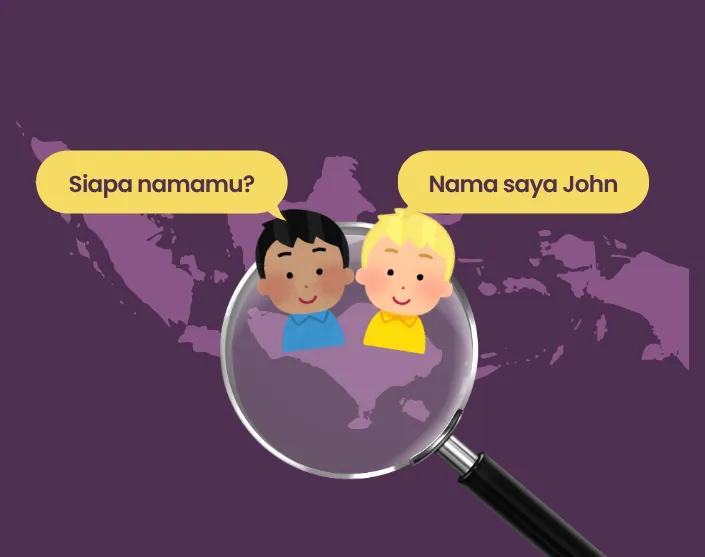
Indonesian language for foreigners is highly essential to practically support your daily conversations during the time you spend in Indonesia. Speak easily and comfortably with the locals to obtain actual information for your day-to-day needs.
- What is the basic Indonesian Language for Foreigners?
- Essential Indonesian Vocabulary for Foreigners
- Basic Indonesian Grammar for Beginners
- What are Indonesian Useful Expressions for Daily Conversations?
- How Can Foreigners Learn Indonesian Language Effectively?
What is the basic Indonesian Language for Foreigners?
As foreigners currently staying in Indonesia for either vacation or other purposes, you are completely exposed to the Indonesian language in many aspects of life.
With every step you take into the community, you will encounter Indonesian native speakers welcoming you with their biggest smiles. Throw a warm smile back at their direction and start saying any Indonesian words, you are now their family.
Indonesian Alphabet and Its Pronunciation
In general, Indonesian is a phonetic language, a language which sounds like the letters. Indonesian language for foreigners will make you learn how to shift sounds from your mother tongue to Indonesian articulation.
Indonesian Pronunciation
Each letter sounds like it is written. Stop overcomplicating your pronunciation and you will be an Indonesian sound master.
e.g.
minum is pronounced [minum]
makan is pronounced [makan]
pikir is pronounced [pikir]
Find out more Indonesian vocabulary here
Unusual Pronunciation in Indonesian Language
While most words are phonetic, some special pronunciations may still occur in the language. Bahasa Indonesia recognizes two distinguished sounds of the letter “e”.
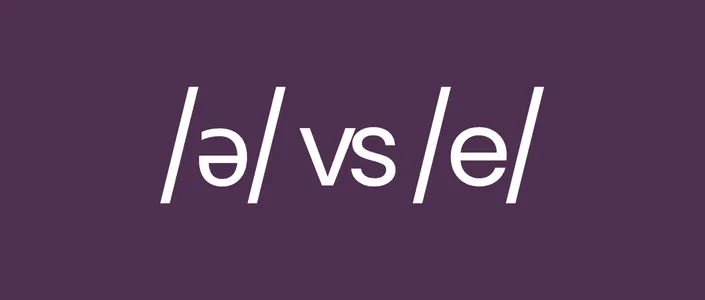
Pronounce /ǝ/ like the vowel sound you make when saying “hurt”. Compare it to how you produce the vowel sound in the word like “met” which sounds /e/.
- g. for schwa /ǝ/
cepat (quick)
senang (happy)
teman (friend)
segar (fresh)
menang (win)
gempa (earthquake)
pelangi (rainbow)
- g. for /e/
hebat (great)
bebek (duck)
bebas (free)
nenek (grandmother)
besok (tomorrow)
sehat (healthy)
lempar (throw)
Learn to distinguish the sounds of letter e here
Does the Indonesian language have silent letters?

Phonetically, Indonesian language doesn’t have silent letters. Every letter has its sound consistent with its symbol. However, in some cases, some words come across what we call a phonetic weakening.
The sound of some letters is weakening and it may cause confusion for beginners. Meet the reductions below and Indonesian language for foreigners should put ease to this issue.
Is the letter k silent?
Since Indonesian language doesn’t recognize any completely silent letters in its pronunciation, only some words containing the letter k (usually at the end of words) may particularly not produce the sound as clearly as the others.
e.g.
- tidak (no)
- banyak (many)
- minyak (oil)
- katak (frog)
- semak-semak (bushes)
Although the letter k succeeds to win against the deletion of sound, the sound gets softer in the pronunciation. You therefore need to say the words without carefully trying to make a strong sound.
- Some words with a strong /k/ are as follow.
kaki (leg)
bakat (talent)
pukul (to hit)
kuasa (power)
kelingking (little finger)
Some regional dialects may also influence the reduction of sound. In Balinese dialects, the letter k in bakso (meatball) is very soft, while some regions may carefully pronounce the k clearly.
Train yourself to pronounce strong /k/ and soft /k/ in Indonesian
Should we pronounce the letter e clearly?
Indonesian language for foreigners is to define which type of e sounds could be weakened. All weakening cases happen in the letter e that is pronounced as schwa /ǝ/.
This phenomenon is often referred to as vowel reduction.
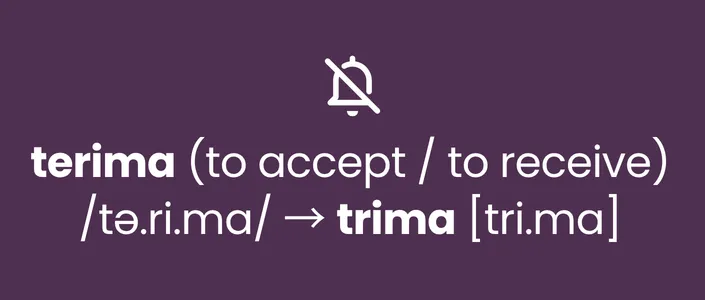
e.g.
- seratus /sə.ra.tus/ → sratus [sra.tus] (one hundred)
- sekali /sə.ka.li/ → skali [ska.li] (one time)
- sekarang /sə.ka.raŋ/ → skarang [ska.raŋ] (now)
- karena /ka.rə.na/ → karna [kar.na] (because)
- berarti /bər.ar.ti/ → brarti [brar.ti] (to mean)
- berani /bə.ra.ni/ → brani [bra.ni] (brave)
- setelah /sə.tə.lah/ → stelah [stə.lah] (after)

Common consonant combinations in Indonesian Pronunciation
Many words in Indonesian language are using combined sounds of either consonants or vowels. Indonesian language for foreigners must contain the guides to this type of sound combinations.
Digraph in Bahasa Indonesia
When two consonants are positioned side by side and pronounced at once, that’s when a digraph occurs.
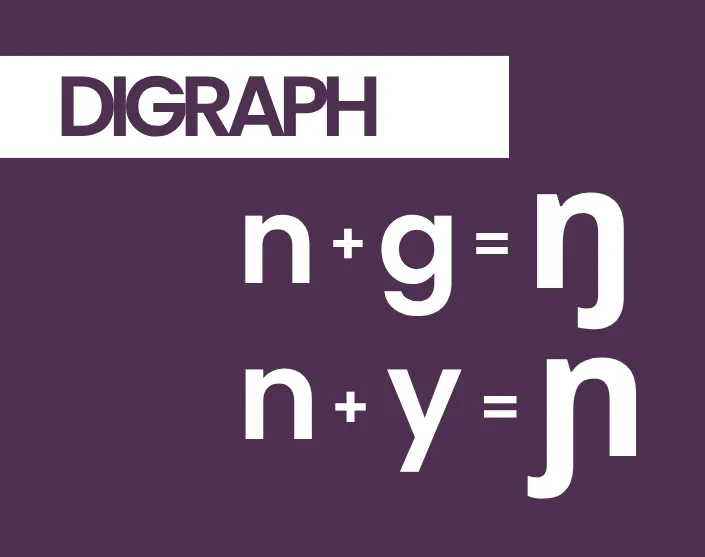
How to pronounce ng /ŋ/?
It’s the same sound you produce when saying the word that contains the two letters “ng” at the end of English words, like “singing”, “playing”, “making”, etc.
However, in Bahasa Indonesia, the combination could also occur in the middle, or even at the beginning of the word.
e.g.
- pisang /pi.saŋ/ (banana)
- pulang /pu.laŋ/ (go home)
- dengan /de.ŋan/ (with)
- semangat /sə.ma. ŋat/ (enthusiasm/energy/passion)
- ngantuk /ŋan.tuk/ (sleepy)
- ngalah /ŋa.lah/ (give in)
The pronunciation of ny /ɲ/
English doesn’t have a single word that contains the two letters “ny” with the pronunciation like what Indonesian has.
The letter “ny” in the English word “sunny” is pronounced /ni/. The most similar sound is found in a word “canyon” to be pronounced /ˈkæn.jən/ and opinion /əˈpɪn.jən/.
While in Indonesian word, the letters “ny” has a single consonant sound /ɲ/, not a combination of /n/ and /j/ as found in the English ones. Here’s your Indonesian language for foreigners to help you practice pronouncing /ɲ/.
e.g.
- nyamuk /ɲa.muk/ (mosquito)
- nyata /ɲa.ta/ (real)
- bunyi /bu.ɲi/ (sound)
- tanya /ta.ɲa/ (ask)
Practice Indonesian’s most common pronunciations here
Diphthong in Indonesian Language
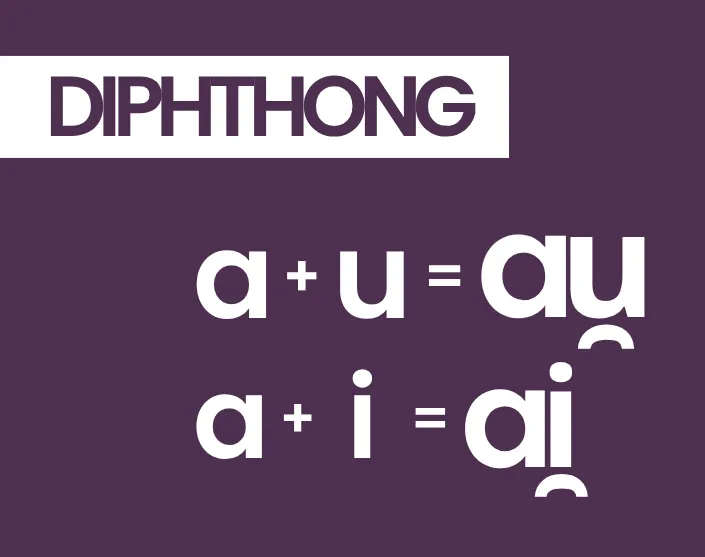
The blend of two vowels pronounced in the same syllable will result in diphthong which is also common in the Indonesian sound.
Is ai always pronounced as /ai̯/?
When ai is found at the end of an Indonesian word, it will be pronounced as diphthong. The sound /ai̯/ may be recognized in English word like “dye”.
e.g.
- pandai /pan.dai̯/ (smart)
- pantai /pan.tai̯/ (beach)
- lihai /li.hai̯/ (skilled)
- pindai /pin/dai̯/ (to scan)
Will the sound /au̯/ only be found at the end of words?
Unlike /ai̯/, /au̯/ is a diphthong commonly found both in the middle and at the end of Indonesian words. At some points, au found in the middle of a word could be pronounced separately into different syllables.
e.g.
- danau /da.nau̯/ (lake)
- silau /si.lau̯/ (dazzling)
- pantau /pan.tau̯/ (to observe)
- kalau /ka.lau̯/ (if)
Learn Indonesian diphthong and more vocabulary here
Basic Greetings in Indonesian Language
Greet the locals in a much friendlier way using Indonesian language for foreigners. It’s easily guaranteed that their warm reaction will leave you in awe.
- halo (hello)
- selamat pagi (good morning)
- selamat siang (good day)
- selamat sore (good afternoon)
- selamat malam (good evening)
- Apa kabar? (How are you?)
- Bagaimana kabarmu? (How are you?)
- senang bertemu denganmu (nice to meet you)
Polite address terms in Indonesian language for foreigners
Your politeness matters when speaking with someone, especially when it comes to the older ones. Immerse deeper into the Indonesian language by mimicking how the locals communicate.
Try using the appropriate address terms and you will sound more natural.
e.g.
“Where will you go?”
The word “you” could be translated into many versions based on who we are talking to.
- Ke mana kamu akan pergi? (standard)
- Ke mana Anda akan pergi? (formal)
Don’t always say kamu or Anda in Indonesian. Try out the following and everyone will instantly become your family members!
- Ke mana Ibu akan pergi? (to a random older woman of your mother’s age)
- Ke mana Bapak akan pergi? (to a random older man of your father’s age)
- Ke mana Nenek akan pergi? (to a random elderly woman of your grandmother’s age)
- Ke mana Kakek akan pergi? (to a random elderly man of your grandfather’s age)
Ibu (mother), bapak (father), nenek (grandmother), and kakek (grandfather) are some of the common address terms used in Indonesian conversations to show respect and politeness to the person we talk to.
Use the language respectfully and start speaking with ease here
Introductions in Bahasa Indonesia
Get to know others with basic Indonesian phrases and start making connections everywhere you go.
- Siapa namamu? (What’s your name?)
- Kamu berasal dari mana? (Where are you from?)
- Berapa usiamu? (How old are you?)
- Di mana kamu tinggal? (Where do you live?)
- Dari mana kamu berasal? (Where are you from?)
- Apa pekerjaanmu? (What do you do for a living?)
- Apa hobimu? (What’s your hobby?)
- Apa yang biasanya kamu lakukan di waktu luang? (What do you usually do in your free time?)
The suffix -mu in Indonesian is used to refer to “your” in English. It’s the short form of kamu with the possessive function.
Remember to use the address terms accordingly!
Also read: Is Indonesian Easy to Learn?
Essential Indonesian Vocabulary for Foreigners
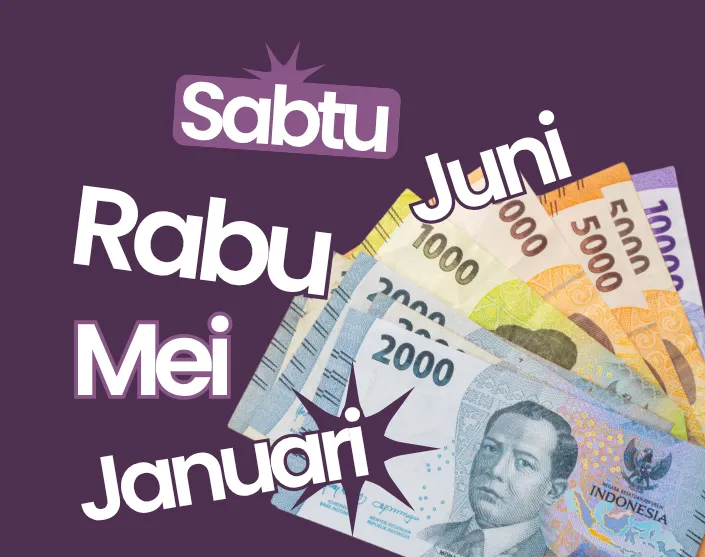
Spend your money wisely while shopping in Indonesia by understanding how Indonesians speak about numbers and money!
Numbers in Indonesian for Shopping and Money
Before getting involved in any transactions, make sure you are aware of Indonesian numbers for the aspect of money. There might be a big difference in the currency rate that you might find confusing. So, be careful!
Indonesian Numbers
- satu (one)
- dua (two)
- tiga (three)
- empat (four)
- lima (five)
- enam (six)
- tujuh (seven)
- delapan (eight)
- sembilan (nine)
- sepuluh (ten)
- sebelas (eleven)
- dua belas (twelve)
- dua puluh (twenty)
- seratus (one hundred)
- seribu (one thousand)
- satu juta (one million)
- satu miliar (one billion)
- satu triliun (one trillion)
Asking about price in Indonesian language for foreigners
Now that you have learned the numbers, let’s go shopping!
- Berapa harganya? (How much is this?)
- Apakah itu harga pas? (Is it a fixed price?)
- Berapa yang harus saya bayar? (How much should I pay?)
- Berapa harga satu kilo mangga? (How much is 1 kg of mango?)
Telling price in Bahasa Indonesia
- Rp 3.500,- (Tiga ribu lima ratus rupiah)
- Rp 26.500,- (Dua puluh enam ribu lima ratus rupiah)
- Rp 315.902,- (Tiga ratus lima belas ribu sembilan ratus dua rupiah)
- Rp 9.167.000,- (Sembilan juta seratus enam puluh tujuh ribu rupiah)
Etc.
Days and Months in Bahasa Indonesia
Discussing plans and appointment dates? Indonesian language for foreigners is here to help you.
Months in Indonesian language
- Januari (January)
- Februari (February)
- Maret (March)
- April (April)
- Mei (May)
- Juni (June)
- Juli (July)
- Agustus (August)
- September (September)
- Oktober (October)
- November (November)
- Desember (December)
How to mention dates in Indonesian?
Always start with the date, month, and finally the year, respectively!
17 August 2026 (tujuh belas Agustus dua ribu dua puluh enam)
1 January 1998 (satu Januari seribu sembilan ratus sembilan puluh delapan)
Basic Indonesian Grammar for Beginners
Basically, you need to rest assured that Indonesian grammar does not require verb conjugation which makes it easier to learn. Is the structure similar to English?
Sentence Structure in Indonesian Language
Indonesian sentences follow the following sentence structure:
Subjek (Subject) – Predikat (Verb) – Objek (Object) – Keterangan (Adverb)
Given the formula, it is pretty much the same as English, if not, much simpler.
Pay attention to the following examples:
- Ayu played badminton
- Ayu plays badminton
Both sentences could easily be translated to Indonesian as “Ayu bermain bulu tangkis” for both tenses.
What makes it different from English is the absence of verb conjugation and instead, Indonesian uses the adverb of time to specify when a particular activity takes place.
Therefore, there is no need to fear the Indonesian language for foreigners because it is that simple.
Take your Indonesian course now!
Question structure in Indonesian
When throwing questions, you may use question words at either the beginning or the end of your sentence.
e.g.
Where did you spend your holiday?
Di mana kamu menghabiskan liburanmu?
or
Kamu menghabiskan liburanmu di mana?
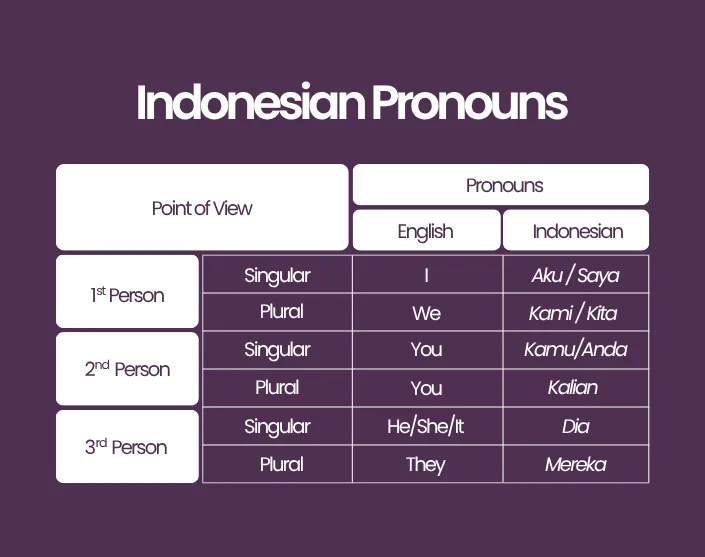
Pronouns in Bahasa Indonesia
Know how to address yourself and others by recognizing the Indonesian pronouns below!
Verbs in Bahasa Indonesia
Indonesian verbs do not recognize conjugation, so you will use the same word anytime. What differs Indonesian verbs is whether it is an active or passive voice.
Indonesian active sentences are easily recognized by the use of prefix me- or ber-, while the passive ones are indicated by the presence of prefix di- or ter-.
e.g.
- melihat (to see)
- melakukan (to do)
- memasak (to cook)
- memutar (to spin)
- merawat (to take care of)
- bernyanyi (to sing)
- bertukar (to swap)
- ditendang (to be kicked)
- diperiksa (to be checked)
- tertinggal (to get left behind)
- terambil (to get picked)
What are useful Indonesian Expressions for Daily Conversations?
Speak up and learn more Indonesian language for foreigners’ expressions as you talk about daily topics!
Phrases for Dining in Indonesian Restaurants or Cafes
- Kami sudah reservasi atas nama John. (We have reservation under John)
- Tolong meja untuk 4 orang. (A table for 4, please)
- Boleh merokok di sini? (Could I smoke here?)
- Saya mau order nasi goreng. (I’d like to order nasi goreng)
- Boleh liat daftar menunya? (Could we have the menu, please?)
- Apa yang kamu rekomendasikan? (What’s your recommendation?)
- Apakah makanan ini pedas? (Is this spicy?)
- Apa isinya? (What’s inside this?)
- Boleh minta tambah nasi? (Could I have some extra rice?)
- Boleh minta tagihannya? (Could we have the bill, please?)
- Apa kamu menerima kartu kredit? (Do you accept credit cards?)
- Boleh tolong dibungkus? (Could you pack this up for me?)
Important Phrases for Shopping
- Apa ada warna lain? (Do you have this in different colors?)
- Di mana ruang ganti? (Where is the fitting room?)
- Apa ini boleh dicoba? (Can I try this on?)
- Apa ada ukuran lebih besar? (Do you have bigger size?)
- Apakah ada potongan harga? (Is there any discount?)
- Saya ambil yang ini. (I’ll take this one)
Learn how to meet and speak with Indonesian locals here!
How Can Foreigners Learn Indonesian Language Effectively?
Indonesian language for foreigners is a structured methodology to give basic-to-advanced understanding about Indonesian language and how it is used in everyday conversations. Learn BIPA effectively with English Café Bali to broaden your knowledge with the best tutors available. Check what we offer below.
- Beginner-friendly to advanced level of Indonesian language
- Customized class hours for both online and in-person sessions
- Young and adult are all welcome
- Personalized lesson plans made just for you
- Free consultation to help you find the best program
FAQ about Indonesian Language for Foreigners
What beginners need to know about the Indonesian language?
You must get used to using Indonesian expressions in everyday conversations, such as ordering food, greeting people, or asking for directions.
How to greet Indonesian people in a friendly manner?
The people of Indonesia really love finding out that foreigners speak even the smallest amount of Indonesian. Start saying “Apa kabar?”as your first friendly gesture of asking how they are feeling.
Are there any silent letters in Indonesian pronunciation?
Indonesian doesn’t have any literal silent letters since it is a phonetic language, but some letters are indeed pronounced with softer sound (the sound is weakened).
Can we always translate the word you to “kamu”?
You can always use kamu because people will still understand. However, to sound more natural in Indonesian, you need proper address terms to maintain respect and smooth flow of the language.